
For payers
Plan the whole board, not just your own bid
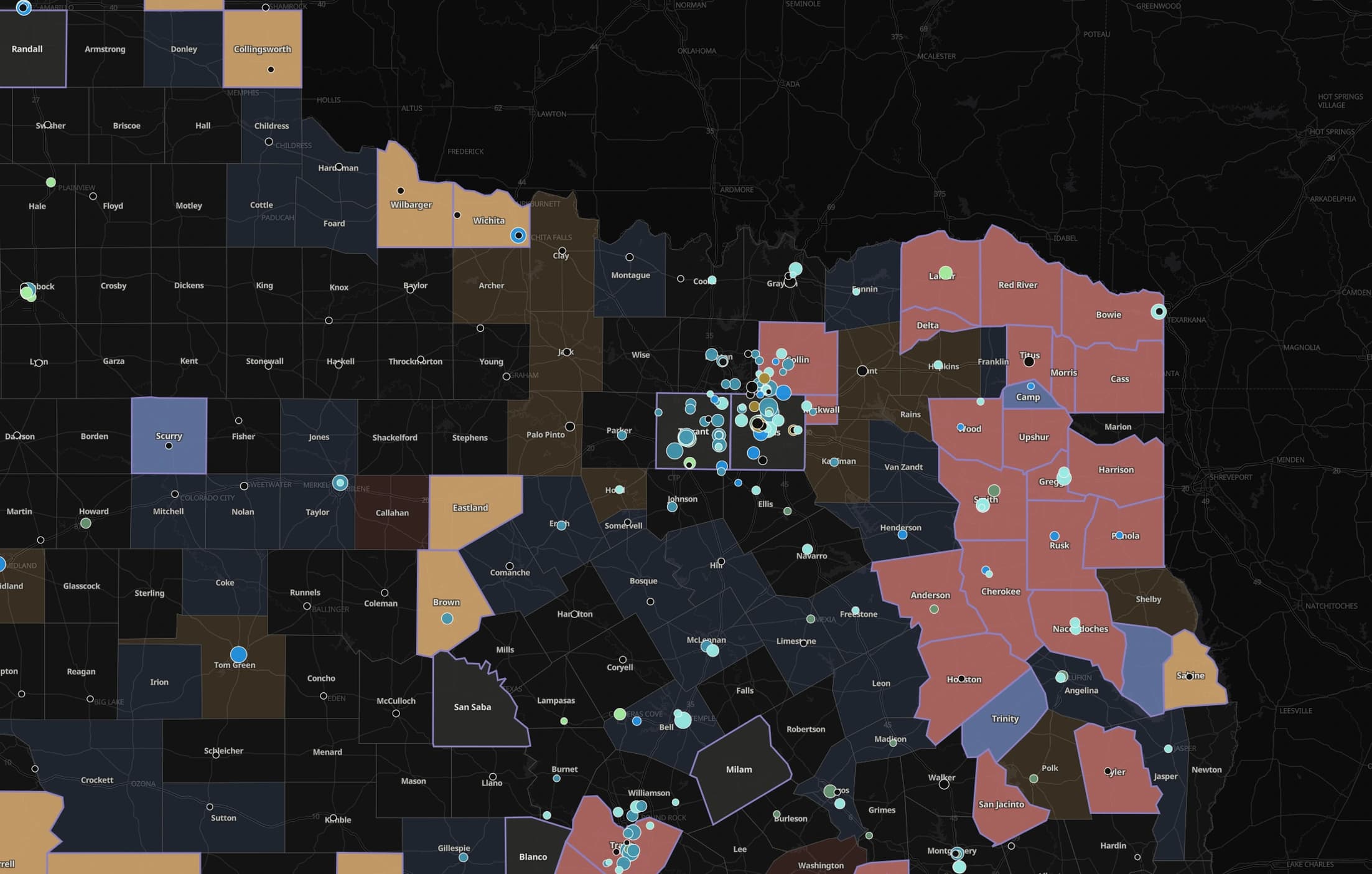
Territory, product, and benefit decisions play out against every rival's counter-move. MTR simulates the full competitive field for your markets, 4 years ahead, so you can commit capital where the simulation says you win.
How the study works from your seat
Model the field you are actually bidding against, rehearse your move against it, then keep only what survives the answer.
Model
See the bid you are actually bidding against
Not your plan projected forward on its own. Every parent organization in your counties, its modeled posture, and the market's own evolution, computed as one board.
War-game
Lose the cycle in private first
Rehearse a filing against the modeled field before you commit capital. You can lose the bid cycle a thousand times cheaply, then play it once for keeps.
Stress-test
Know which plays survive the response
Every recommended action is scored across thousands of worlds, each one a complete version of your market with every rival's move in it, so what reaches your committee is ranked by durability, how much of the position survives when rivals respond, rather than by upside alone.
4 releases, timed to your year
Each release is keyed to the CMS publication events that change the answer, so it lands before the decision it informs rather than after.
October
The field reveals itself
Landscape, crosswalk, and Star Ratings publish together. Every rival's actual move for the coming plan year becomes visible at once, and is read against what the simulation projected.
January – February
The planning year opens
Selling-season share movement is decomposed and the Advance Notice is pushed through the competitive field, showing who is squeezed hardest before you set targets.
April
The pricing sprint
The 8 weeks between the Rate Announcement and the June bid lock. Final benchmarks, county economics, and the guardrails that bound what rivals can buy down.
July
Footprint and repair
The bid is locked, so attention moves to the constrained repair window and to next year's map: which counties to file for, and which to leave.
Where it lands inside the plan
One study, read for the decision each function owns. The board is the same; what you take from it is not.
- Quality and Stars
- Which counties justify the investment, given who else is contesting them.
- Risk adjustment
- Where the field is thickening, so population strategy is built against it rather than beside it.
- Value-based contracting
- Which partners hold durable position in the markets you are committing to.
- Product strategy and pricing
- What the competitive field is likely to look like by the time the bid lands.
- Network development
- Where depth is worth building, and where it would be built into someone else's market.
- Growth planning
- Which counties reward expansion once every rival's counter-move is priced in.
- Marketing
- Where the AEP dollar meets the least resistance, county by county.
What you are buying
A standing subscription priced against your footprint, not an engagement scoped against someone's availability.
Every county you file in, not a sample
Coverage runs to every county in your footprint and every carrier competing in it, so the answer does not depend on which markets someone had time to analyze.
Nothing to integrate before the bid
Built from public data. No data-sharing agreement and no IT queue stands between you and the first study, which matters when the decisive window is 8 weeks long.
Your actuaries can audit it
Every figure traces to the run, model version, and dataset that produced it. Model risk can follow the chain rather than take a result on faith.
Replaces a strategy engagement
Work a consulting firm would scope over months, delivered as a standing subscription that refreshes when the market actually changes.
See it run on your market
A live walkthrough of the Latitude Study on the counties that matter to you.